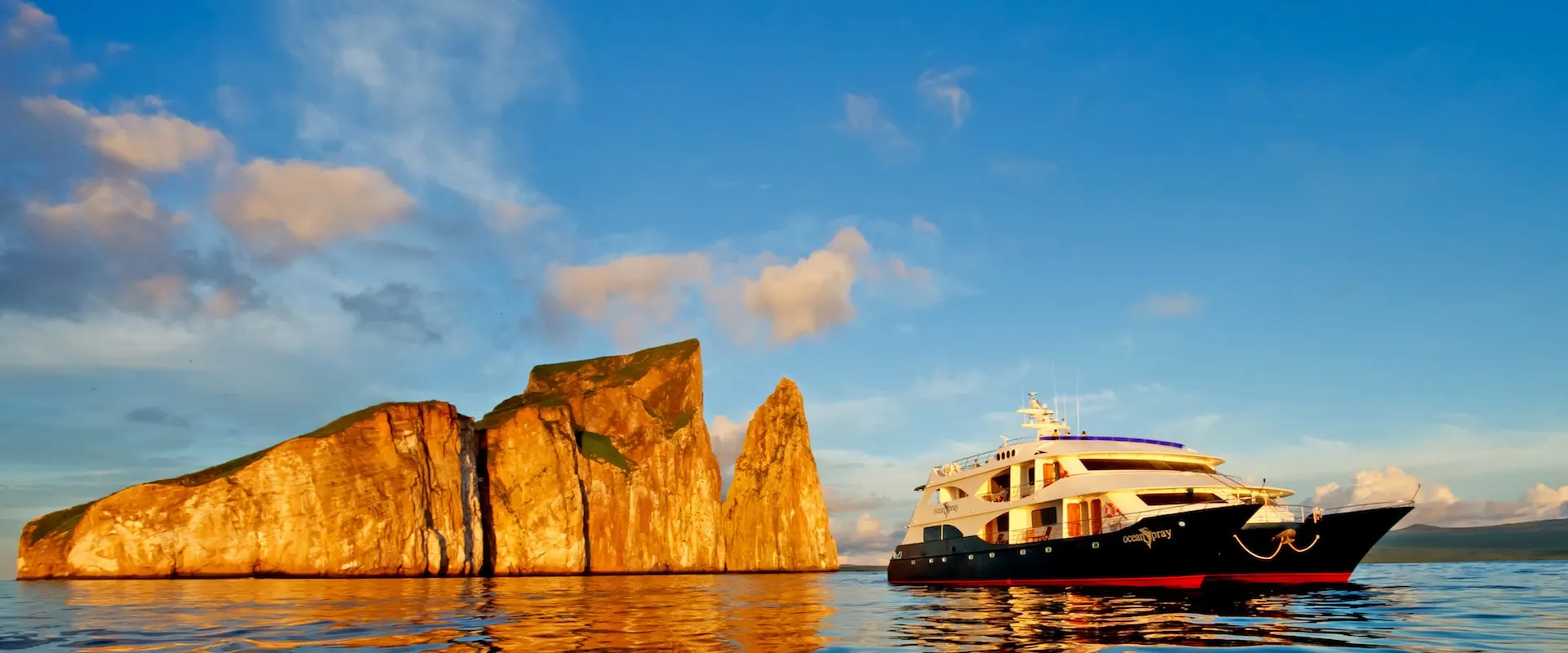
The Galápagos Islands are one of the most extraordinary wildlife destinations in the world. Located 600 miles off the coast of Ecuador, this volcanic archipelago offers a rare opportunity to experience nature in its purest form.
Here, giant tortoises roam freely. Blue-footed boobies perform elaborate courtship dances. Marine iguanas swim through the ocean. Sea lions nap on white-sand beaches and play alongside snorkelers.
Visitor numbers are strictly limited. All excursions are led by certified bilingual naturalist guides licensed by the Galápagos National Park. The result is a travel experience that feels intimate, protected, and deeply educational.
If you are planning a journey, one question quickly becomes central: which Galápagos cruise is right for you?
Why a Galápagos Cruise Is Different
This is not a typical cruise.
Most Galápagos vessels carry just 16 guests. Even the largest expedition ships are capped at 100 passengers due to national park regulations. There are no casinos or large-scale entertainment venues. The focus is entirely on wildlife exploration and guided discovery.
Each day may include:
- Hiking across lava fields and volcanic ridges
- Snorkeling with sea lions, reef sharks, rays, and sea turtles
- Kayaking along dramatic rocky coastlines
- Observing nesting seabirds just feet away
Because landing sites are carefully regulated and scheduled, cruising is the most efficient and comprehensive way to explore multiple islands in one journey. Browse our full Galápagos vessel directory to see the range of options available.
Choosing the Right Galápagos Cruise
Your decision typically comes down to four key factors: cruise length, vessel size, level of comfort, and itinerary route. Let’s explore each in detail.
Cruise Length: Why 6–8 Days Is Ideal
Galápagos cruises typically range from 4 to 8 days, with extended combination itineraries available. While shorter trips can be rewarding, a 6–8 day cruise is widely considered the ideal balance for most travelers.
6–8 Day Cruises (Recommended Standard)
A 7 or 8-day itinerary allows you to reach more remote islands, experience greater ecological diversity, enjoy a more relaxed rhythm, maximize snorkeling and hiking opportunities, and reduce travel fatigue by limiting transitions. This length provides meaningful immersion without feeling rushed. For first-time visitors, it offers the most comprehensive introduction to the archipelago. Our Classic Galápagos Expedition Cruise is an excellent example of this format.
Shorter Cruises (4–5 Days)
Shorter routes can work well for travelers who plan to combine the Galápagos with other destinations—such as Machu Picchu, the Amazon, or mainland Ecuador—or who have limited vacation time. Even a 4-day cruise delivers extraordinary wildlife encounters. However, fewer islands are visited, and the overall perspective is narrower.
Extended Explorations (10–15 Days)
Some operators allow guests to combine back-to-back itineraries designed to avoid repeating landing sites. This creates a comprehensive expedition covering multiple regions of the archipelago. Extended journeys are ideal for photographers, wildlife enthusiasts, and travelers seeking deeper exploration. Our Galápagos Islands & Ecuadorian Amazon itinerary offers an extended multi-region adventure.
What Is a Typical Day Like?
A Galápagos expedition follows a structured but rewarding rhythm. After flying from Quito or Guayaquil to Baltra or San Cristóbal, you are greeted by your certified bilingual naturalist guide and transferred to your vessel.
Most days include a morning excursion—either a hike or snorkel—followed by midday sailing with onboard lunch, an afternoon excursion, and an evening wildlife briefing with an educational presentation. While you sleep, the vessel navigates to the next island.
Guides are licensed by the Galápagos National Park. On higher-class vessels, many guides have decades of experience and advanced training in marine biology, ornithology, or conservation science.
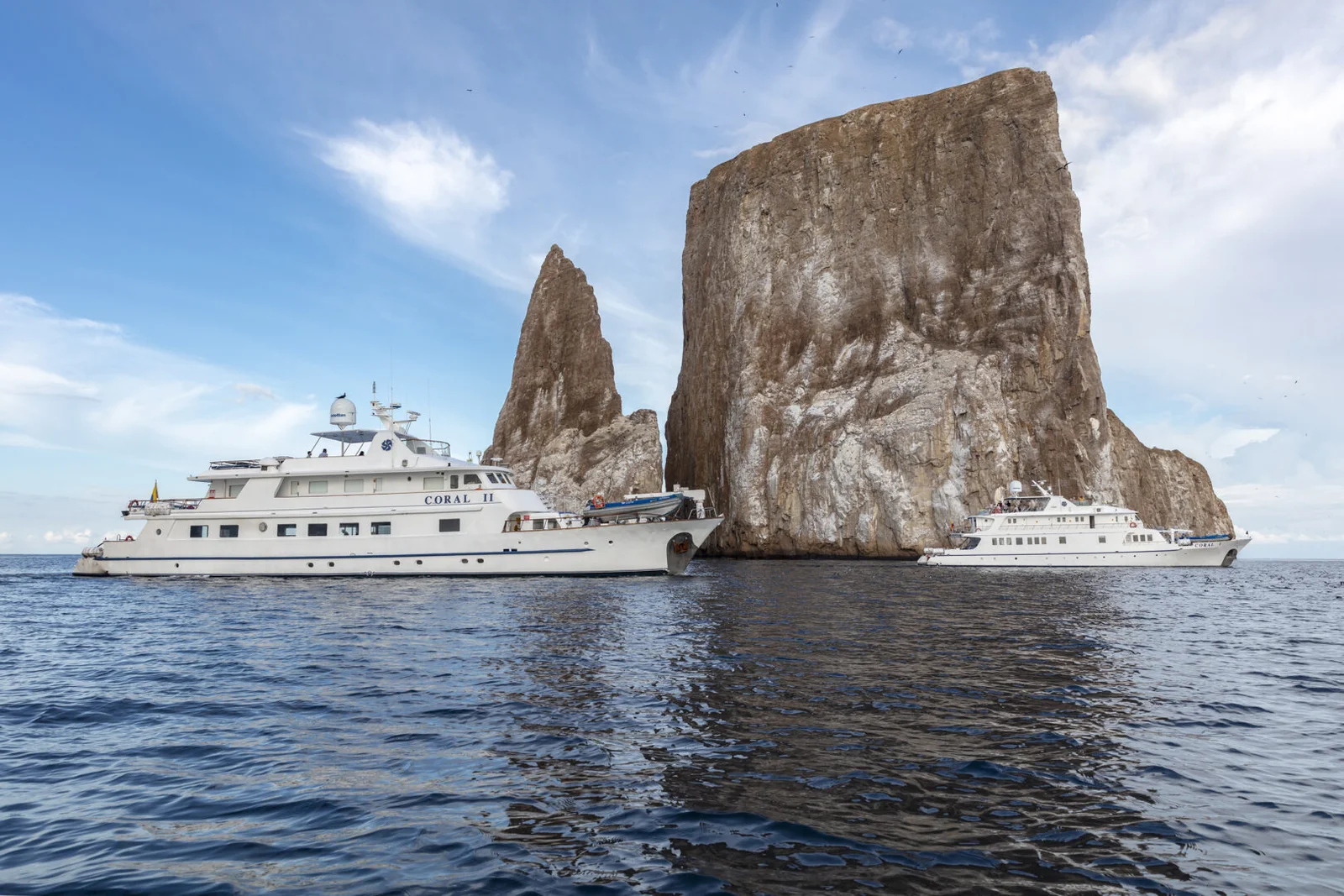
Boat Size: Yacht, Catamaran, Mid-Size or Larger Expedition Ship?
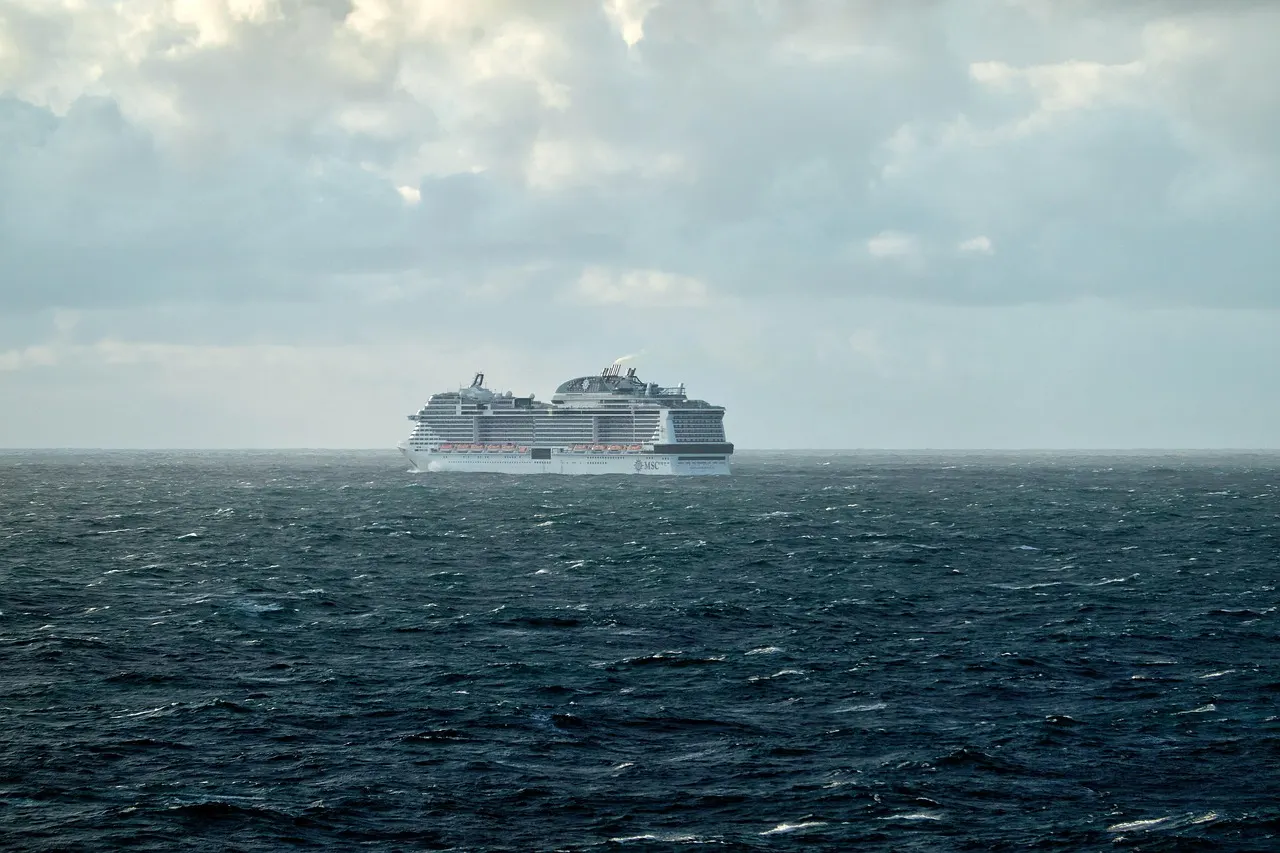
Galápagos vessels range from intimate 16-guest yachts to larger expedition ships carrying up to 100 guests. While all follow the same national park regulations and visit approved landing sites, the onboard atmosphere can vary. Compare specific vessels in our vessel directory.
Small Yachts (16 Guests)
- Highly intimate atmosphere
- Personalized guiding experience
- Classic monohull design
- Expedition-focused and efficient
With just 16 guests onboard, these vessels offer a close-knit environment and direct interaction with guides and fellow travelers.
Catamarans (16 Guests)
- Two-hull design for increased stability
- Smoother navigation
- Typically more spacious cabins
- Often include panoramic windows or private balconies
Catamarans are among the most requested vessel types, especially for travelers who value stability, space, and comfort.
Mid-Size Expedition Ships (22–48 Guests)
- More expansive public areas
- Multiple naturalist guides onboard
- Larger dining rooms and observation decks
- Slightly broader social atmosphere
Mid-size ships offer a balance between intimacy and space. You still enjoy an expedition-focused experience, but with more onboard amenities and room to spread out. These vessels often appeal to travelers who want comfort and social energy without the scale of a larger ship.
Large Expedition Ships (50–100 Guests)
- Multiple decks and expansive lounge areas
- Larger crew and guide teams
- More structured onboard programming
- Greater variety of cabin categories
These ships provide the most space and infrastructure. While daily excursions are still conducted in small, regulated groups, the onboard environment feels more like a small expedition ship than a private yacht.
Regardless of vessel size, wildlife encounters, landing sites, and conservation standards remain consistent across the archipelago.
Amenities & Expedition Gear
All Galápagos cruises are expedition-focused, but onboard amenities vary by vessel class. Standard inclusions on most boats:
- Snorkeling equipment
- Wetsuits
- Kayaks or paddleboards
- Zodiac transfers for island landings
- Guided shore excursions
- Air-conditioned cabins with private bathrooms
Higher-end vessels may also include onboard WiFi (where satellite connectivity allows), underwater cameras or video equipment, glass-bottom boats, jacuzzis or small spa areas, premium lounges and observation decks, private balconies or panoramic suites, and elevated culinary programs with refined dining.
Wildlife access remains consistent. Comfort and onboard polish are what differ.
Class of Vessel: Comfort & Experience Level
Boat class influences cabin size, guide credentials, cuisine, service ratios, and overall atmosphere.
Tourist Class
Comfortable and practical. Cabins are compact but functional, with private bathrooms and air conditioning. Public spaces are modest. Dining is well-prepared but simple. Guides are certified and knowledgeable. Service is efficient and professional. Ideal for travelers who prioritize wildlife access over onboard luxury.
Tourist Superior
A step up in space and refinement. Cabins are more spacious, often with larger windows. Dining quality improves, with more varied menus and better presentation. Public areas feel more polished. Service is more attentive, and guide experience levels are often higher. Strong value for travelers wanting added comfort without premium pricing.
First Class
Refined and well-balanced. Cabins are generous in size, sometimes featuring panoramic windows or private balconies. Interiors are thoughtfully designed. Social spaces are inviting and well-appointed. Crew-to-guest ratios are higher, allowing for more personalized service. Cuisine is elevated, often incorporating fresh local ingredients and curated menus. Naturalist guides are highly experienced and skilled interpreters.
Luxury Class
Premium in every detail. Suites are spacious and elegantly designed, frequently with private balconies and expansive ocean views. Public spaces are sophisticated and expansive. Crew-to-guest ratios are high, ensuring attentive service. Dining approaches fine-dining standards, with thoughtful presentation and premium sourcing. Guides are often among the most experienced in the region, sometimes with advanced academic backgrounds in marine biology or conservation.
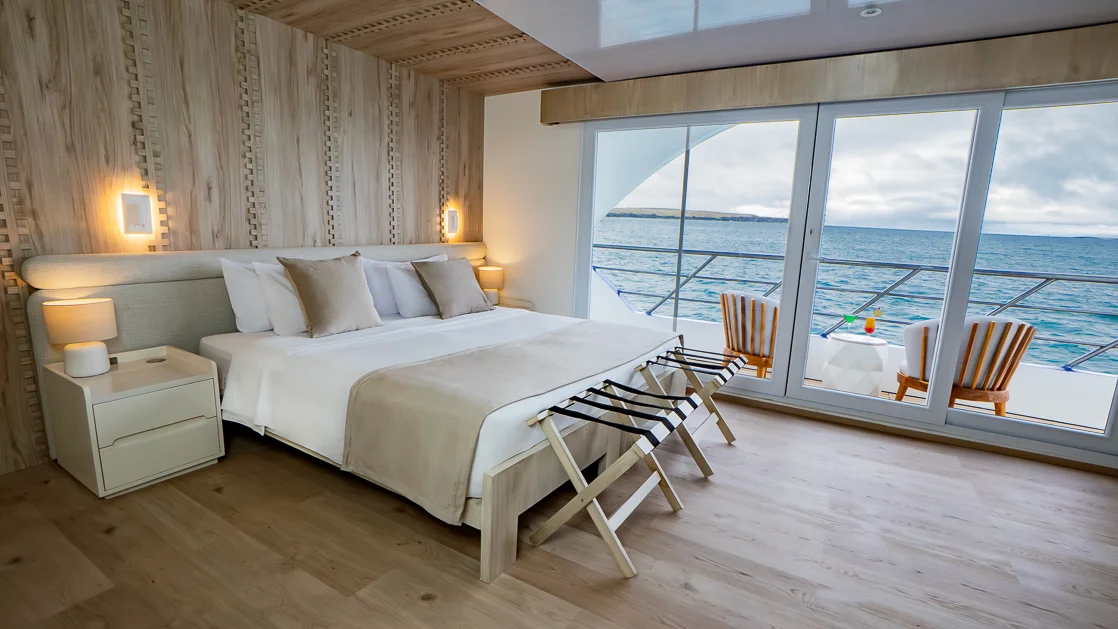
All classes visit the same protected islands. The distinction lies in space, service, and overall level of refinement. Explore vessels across all class levels in our Galápagos vessel directory.
Itinerary Routes: How Much Do They Really Matter?
Every Galápagos itinerary is extraordinary. Wildlife density across the archipelago is remarkably high, and no matter the route, you will experience close encounters with iconic species—sea lions, marine iguanas, blue-footed boobies, giant tortoises, reef sharks, rays, and dramatic volcanic landscapes.
Some routes include islands such as Isabela and Fernandina, known for dramatic volcanic scenery and species like the flightless cormorant. Others may visit Genovesa—often called Bird Island—recognized for its large seabird colonies.
For most travelers, the overall experience matters more than the precise island sequence. Cruise length, vessel comfort, and guide quality typically have a greater impact on your journey than choosing between two strong routes.
If you have specific wildlife goals or personal preferences, speak with a dedicated Galápagos expert. We can narrow down the best options based on your priorities and recommend the itinerary that aligns with your travel style.
The good news is simple: in the Galápagos, it is difficult to choose wrong.
Explore Further
Ready to start comparing options? Explore our Galápagos vessel directory to compare ships, or view sample itineraries like the Classic Galápagos Expedition Cruise and the Family Galápagos Expedition Cruise. For a multi-destination adventure, consider combining your cruise with Machu Picchu and the Amazon or mainland Ecuador.
Is a Galápagos Cruise Worth It?
For wildlife enthusiasts, photographers, families, and curious travelers, the Galápagos offers something increasingly rare: a destination where nature still feels untamed. You are not observing wildlife from afar—you are moving through its habitat.
If you are ready to explore the Galápagos Islands, we can help you evaluate vessels, compare routes, and design a journey tailored to your timeframe and travel style. Get in touch to start planning.
The ecosystem remains one of the most remarkable on Earth. The experience is unlike anywhere else. Start planning your Galápagos journey today.